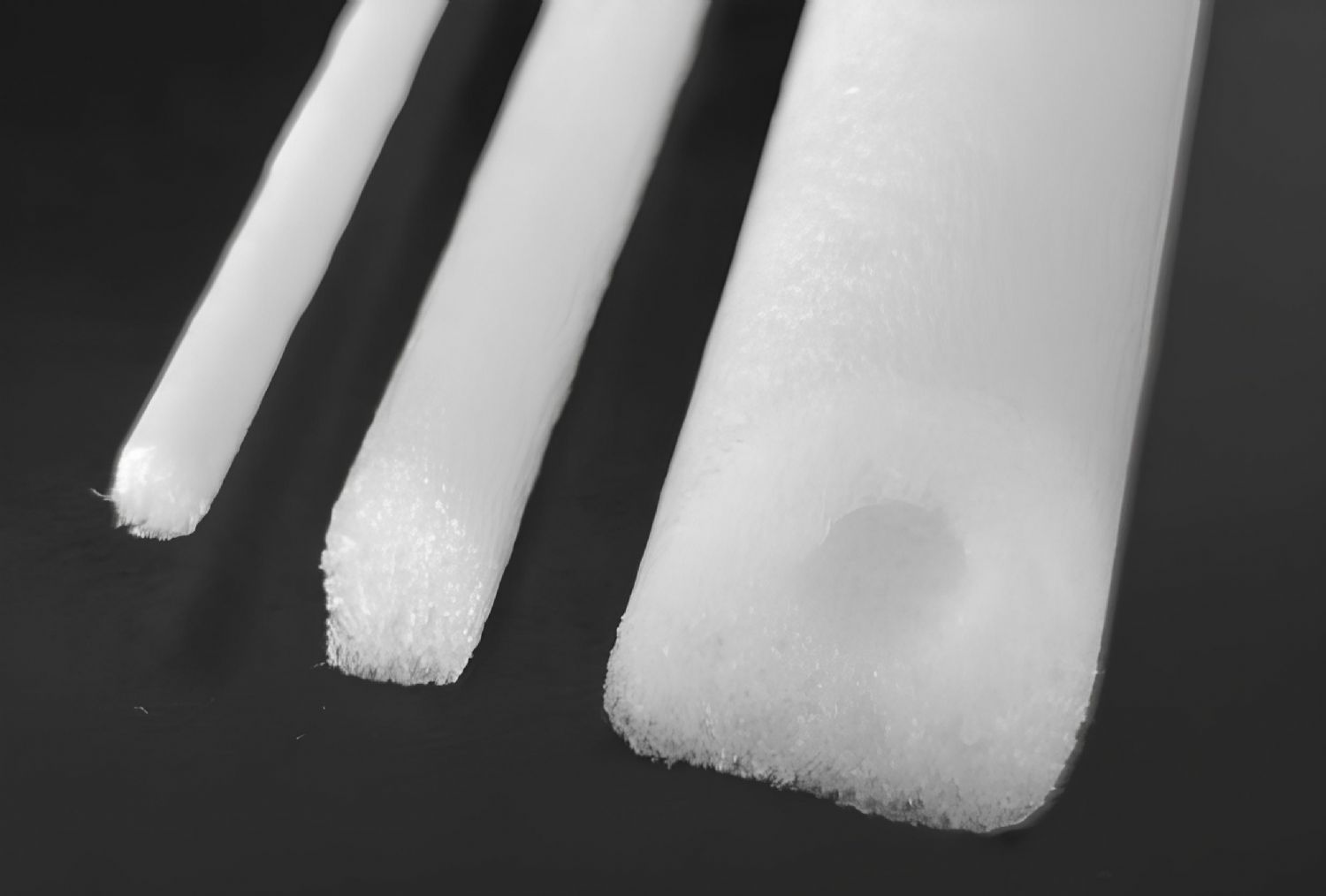
Physical Foaming PE and EVA Profiles
Physical foaming of PE (Polyethylene) and EVA (Ethylene Vinyl Acetate) profiles is a manufacturing process in which a physical blowing agent is incorporated into the polymer matrix to create lightweight, flexible, and durable profiles with a cellular structure. These foamed profiles are widely used in industries such as construction, automotive, packaging, and consumer goods due to their enhanced thermal insulation, shock absorption, and cost efficiency.
Process Overview
Material Selection
Polyethylene (PE): Known for its flexibility, chemical resistance, and durability.
Ethylene Vinyl Acetate (EVA): Offers greater flexibility, cushioning, and resilience compared to PE.
Additives such as stabilizers, pigments, or flame retardants may be added to enhance specific properties.
Blowing Agent Introduction
A physical blowing agent like carbon dioxide (CO₂) or nitrogen is injected into the molten polymer during the extrusion process.
The blowing agent expands as the material exits the extrusion die, forming a uniform cellular structure.
Extrusion
The foamed material is extruded into specific profile shapes, such as rods, tubes, or customized cross-sections.
The dimensions and cellular density are tailored to meet the application's requirements.
Cooling and Cutting
The extruded profiles are cooled to stabilize their structure.
They are then cut or shaped into the desired lengths or forms for their intended use.
Benefits
Lightweight
The cellular structure reduces the density of the profiles, making them easier to handle and install.
Flexibility and Resilience
Foamed PE and EVA profiles offer excellent cushioning and flexibility, ideal for shock absorption and impact protection.
Thermal and Acoustic Insulation
The foam structure provides effective insulation against heat and sound, enhancing energy efficiency and noise reduction.
Cost Efficiency
Reduced material usage during production lowers costs without compromising performance.
Customizability
Profiles can be tailored to specific shapes, sizes, and densities for diverse applications.
Applications
Construction
Used in expansion joints, sealing, weatherstripping, and insulation.
Automotive
Profiles for gaskets, seals, vibration dampening, and protective padding.
Packaging
Shock-absorbing profiles for protecting fragile goods during transportation.
Sports and Recreation
EVA profiles are common in mats, padding, and footwear components due to their cushioning properties.
Consumer Goods
Lightweight and flexible profiles for handles, grips, and toys.
Advancements
Recent innovations in physical foaming for PE and EVA profiles include the use of environmentally friendly blowing agents and advanced extrusion technologies that improve foam uniformity and reduce environmental impact. Blending PE and EVA with biodegradable or recyclable materials is another area of focus, enhancing the sustainability of these profiles.
The combination of lightweight properties, flexibility, and cost-effectiveness makes foamed PE and EVA profiles a versatile solution for a wide range of industrial and commercial applications. These profiles continue to gain popularity due to their ability to meet specific performance demands while supporting sustainability efforts.