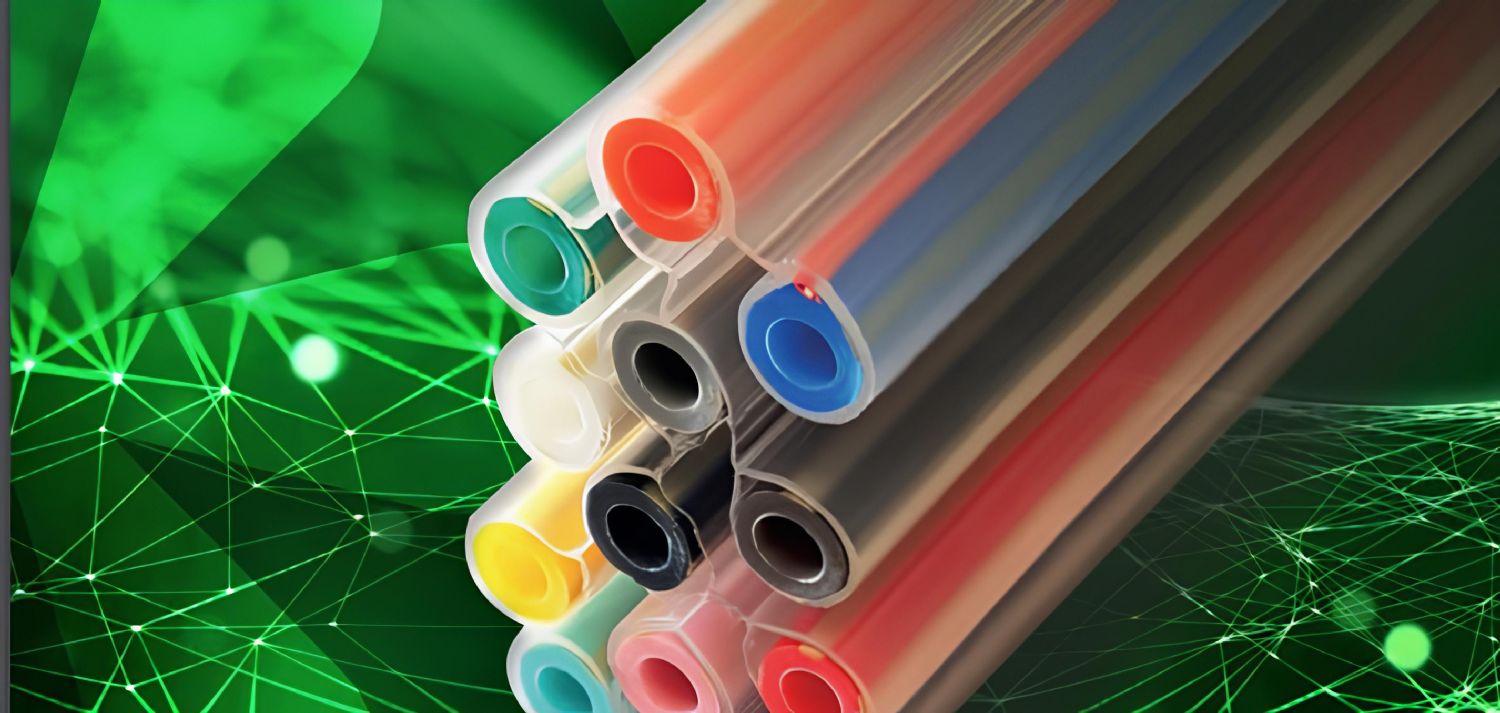
Physical Foaming Microducts for Fiber Optic Cables
Microducts are small, flexible tubes used to house and protect fiber optic cables. Physical foaming is a technique employed to enhance the properties of these microducts, making them lighter, more flexible, and better insulated.
Process:
Material Selection: Typically, high-density polyethylene (HDPE) is used as the base material for microducts.
Gas Injection: During the extrusion process, a gas, such as nitrogen or carbon dioxide, is injected into the molten plastic.
Foaming: The injected gas forms tiny bubbles within the plastic matrix, expanding the material and creating a foam-like structure.
Cooling and Solidification: The foamed microduct is cooled, solidifying the foam structure and creating a lightweight, insulated tube.
Benefits:
Reduced Weight: Foaming significantly reduces the weight of the microducts, making them easier to handle, transport, and install.
Improved Flexibility: The foam structure enhances the flexibility of the microducts, allowing them to bend more easily and navigate complex pathways.
Enhanced Insulation: The air trapped within the foam cells provides excellent thermal and acoustic insulation, protecting the fiber optic cables from external temperature fluctuations and vibrations.
Cost-Effectiveness: Reduced material usage and easier handling can lead to lower installation costs.
Applications:
Telecommunications: Microducts are widely used in telecommunications infrastructure for deploying fiber optic cables in underground conduits, aerial installations, and duct systems.
Data Centers: Foamed microducts can be used in data centers to provide flexible and lightweight pathways for high-density fiber optic cabling.
Industrial Applications: They can also be used in industrial settings for various communication and sensor networks.
Challenges:
Controlling Foam Structure: Precise control of the foaming process is essential to achieve consistent foam density and cell structure, which affects the mechanical properties of the microducts.
Maintaining Dimensional Stability: The foaming process can sometimes affect the dimensional stability of the microducts, which is crucial for ensuring proper cable installation and performance.
By leveraging the benefits of physical foaming, manufacturers can produce high-performance microducts that meet the demanding requirements of modern fiber optic communication networks.