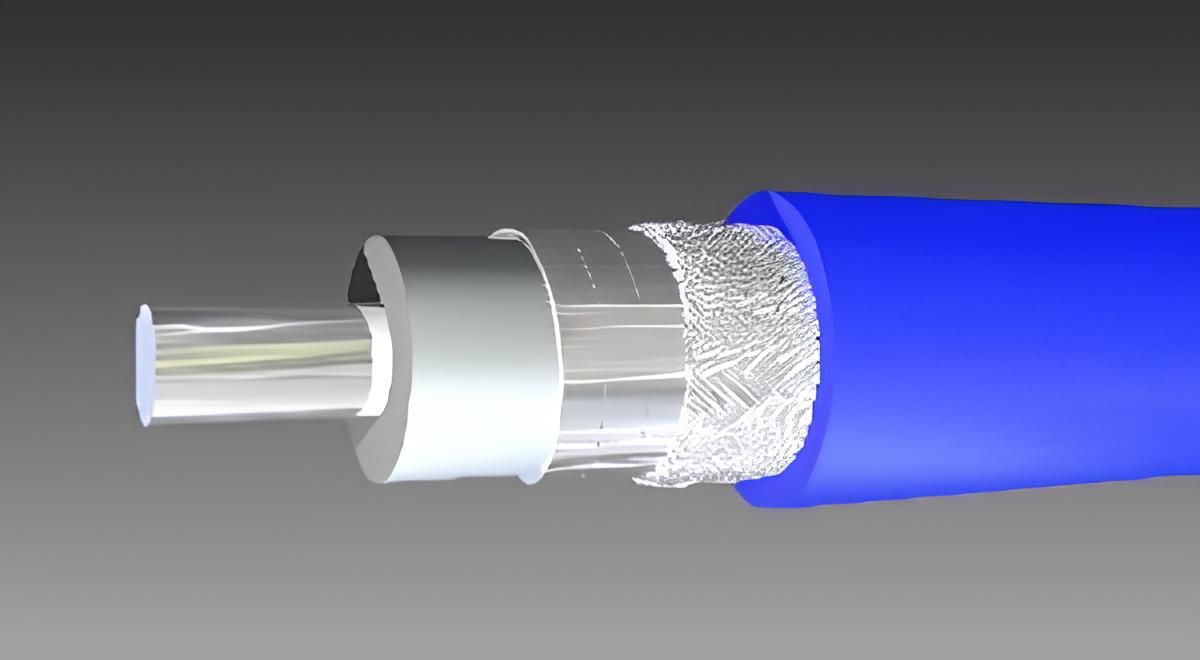
Physical Foaming Fiber Optic Cable
Physical foaming of fiber optic cables is a process used to enhance the properties of cable insulation and improve overall performance. This technique involves incorporating a physical foaming agent, such as nitrogen or carbon dioxide, into the polymer used in the cable's insulation or buffer layers. The resulting cellular structure reduces weight, improves flexibility, and enhances thermal and electrical insulation, making the cables suitable for demanding applications.
Process Overview
Material Selection
The primary material used is typically polyethylene (PE) or a similar thermoplastic due to its excellent insulation properties.
Additives such as stabilizers or flame retardants may also be included to meet specific performance requirements.
Foaming Agent Introduction
A physical foaming agent, like nitrogen or CO₂, is injected into the molten polymer during the extrusion process.
As the polymer exits the extruder, the pressure drop causes the foaming agent to expand, forming microcells within the material.
Extrusion
The foamed polymer is applied as an insulating or buffering layer around the optical fibers using advanced extrusion equipment.
The process ensures uniform foam distribution to maintain consistent insulation properties.
Cooling and Finishing
The cable is cooled and solidified, with the foamed layer stabilizing around the fibers.
Additional layers, such as protective jackets, may be applied depending on the cable's intended use.
Benefits
Weight Reduction
The cellular structure significantly reduces the overall weight of the cable, improving ease of installation and reducing transportation costs.
Thermal and Electrical Insulation
Foamed insulation provides excellent thermal resistance and reduces dielectric losses.
Flexibility
The reduced density of the foamed material enhances the cable's flexibility, making it easier to route in complex installations.
Cost Efficiency
Lower material usage during the foaming process reduces production costs.
Environmental Advantages
The use of physical foaming agents minimizes the environmental impact compared to chemical alternatives.
Applications
Telecommunication
Lightweight and durable fiber optic cables for data transmission over long distances.
Aerospace and Defense
Cables requiring reduced weight and high performance in extreme conditions.
Industrial Automation
Flexible cables for complex machinery and systems.
Marine Applications
Subsea fiber optic cables with enhanced insulation for underwater conditions.
Advancements
Recent innovations in physical foaming for fiber optic cables include the development of eco-friendly foaming agents and advanced extrusion technologies to enhance consistency and performance. Additionally, research into high-performance polymer blends has improved the thermal and mechanical properties of foamed cables, making them suitable for increasingly demanding applications.
This process is gaining popularity due to its ability to balance performance, weight reduction, and cost-effectiveness, while addressing environmental concerns in modern cable manufacturing.