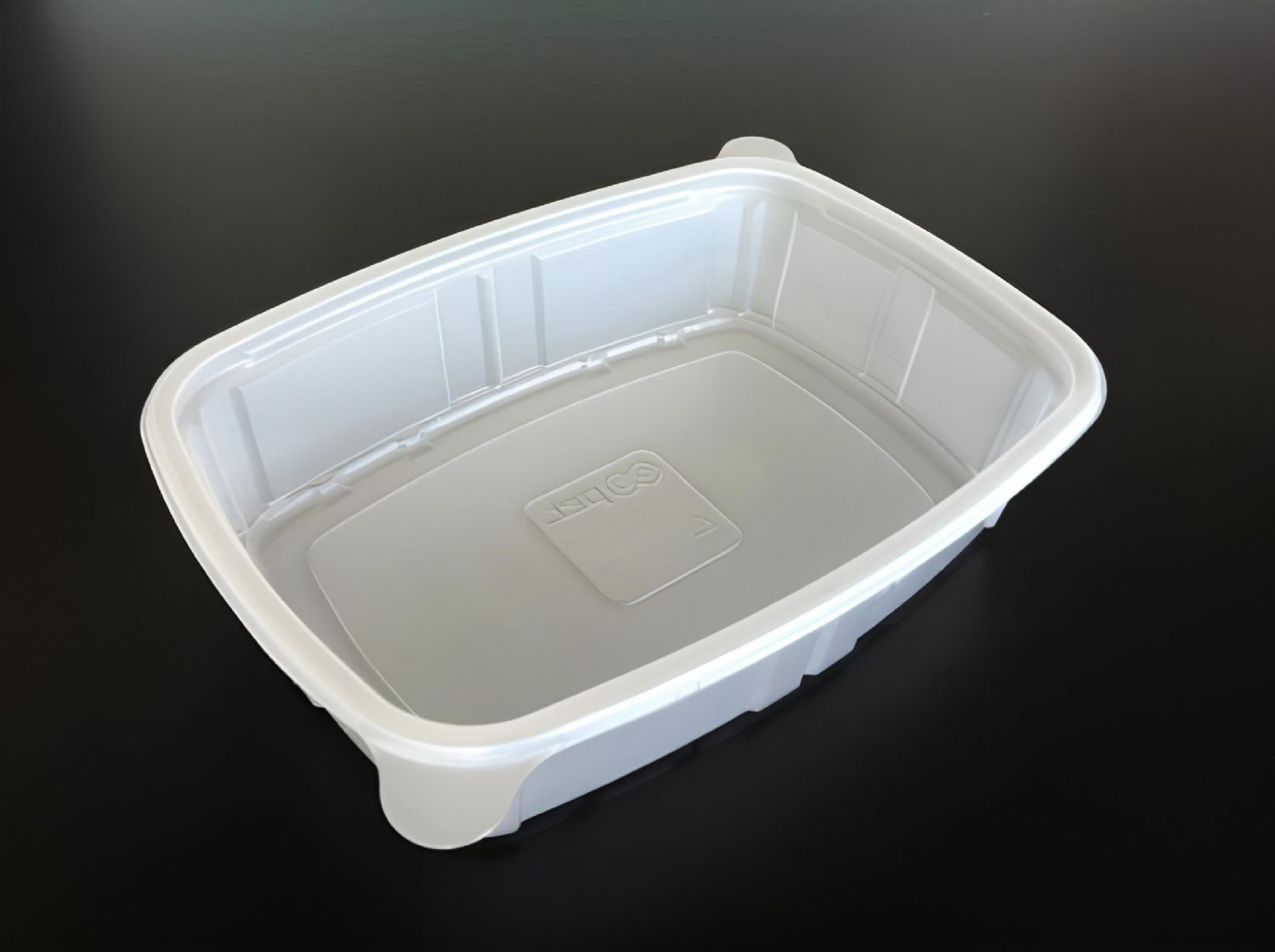
Physical foaming of PET (Polyethylene Terephthalate) trays is a process that incorporates a physical blowing agent, such as CO₂ or nitrogen, into the PET material during manufacturing. This creates a lightweight, cellular structure that enhances the properties of PET trays while reducing material usage.
In this process, PET pellets are melted in an extruder to form a uniform polymer melt. A physical blowing agent is injected under high pressure, and as the mixture exits the extruder or mold, the pressure drop causes the agent to expand, forming gas bubbles within the material. This results in a foamed structure that is then shaped into trays and cooled to solidify.
The benefits of physically foamed PET trays include reduced weight, which lowers transportation costs and improves handling, and material savings, which decrease production costs. The cellular structure provides better thermal insulation, making these trays ideal for food packaging, and the absence of chemical blowing agents ensures that the trays remain recyclable, supporting sustainability. Despite being lightweight, these trays retain sufficient strength for packaging needs.
Applications include food packaging for ready meals, fresh produce, and bakery items, as well as industrial uses like protective packaging. Challenges involve ensuring uniform cell size, controlling the injection and expansion of the blowing agent, and managing the higher initial costs of specialized equipment. Advances in technology, such as improved process controls and the use of eco-friendly gases, are making foamed PET trays a cost-effective and sustainable packaging solution.