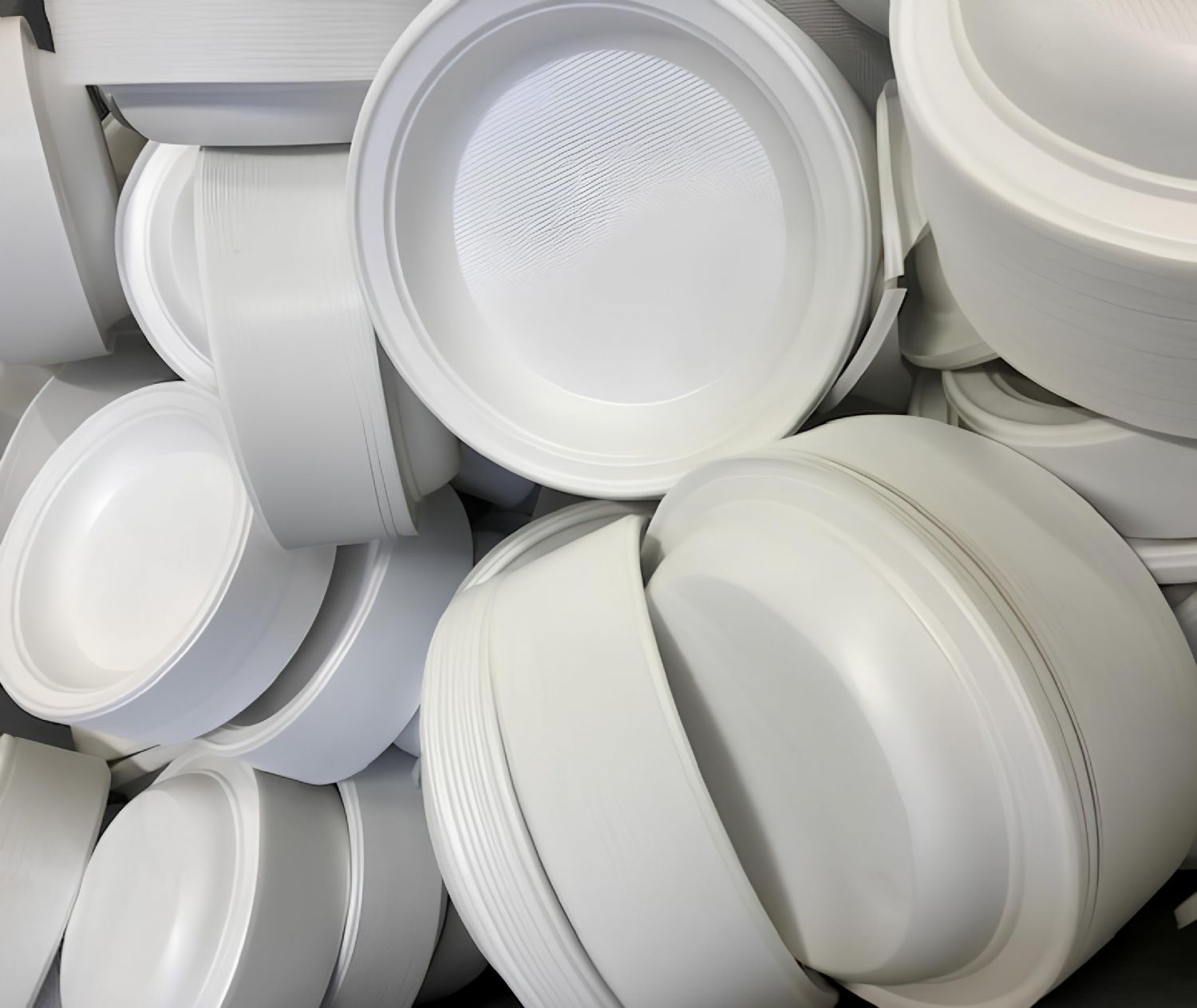
Physical Foaming Disposable Dishes
Physical foaming of disposable dishes involves introducing a physical blowing agent, such as CO₂ or nitrogen, into the raw material during production. This process creates a cellular structure within the material, reducing weight and material consumption while improving thermal insulation and maintaining structural integrity.
Process Overview
1. Material selection typically involves thermoplastics such as polypropylene, polystyrene, or polyethylene.
2. The material is melted and mixed with a physical blowing agent under high pressure.
3. Upon exiting the extrusion or molding equipment, the pressure drop causes the blowing agent to expand, forming microcells within the material.
4. The foamed material is shaped into disposable dishes, cooled, and solidified.
Benefits
- Lightweight design makes handling and transportation easier.
- Reduced material usage lowers production costs and environmental impact.
- Improved thermal insulation helps maintain the temperature of food or beverages.
- Stiffness and strength are maintained despite reduced material density.
Applications
Foamed disposable dishes are widely used in food service for items such as plates, bowls, and trays. They are especially common in takeout packaging and event catering due to their cost-effectiveness and practicality.
Advancements
Recent innovations focus on using sustainable materials and environmentally friendly blowing agents. Some manufacturers are exploring bio-based polymers and physical foaming techniques to produce more eco-friendly disposable dishes. These advancements aim to reduce the environmental footprint while retaining the benefits of lightweight and durable foamed products.