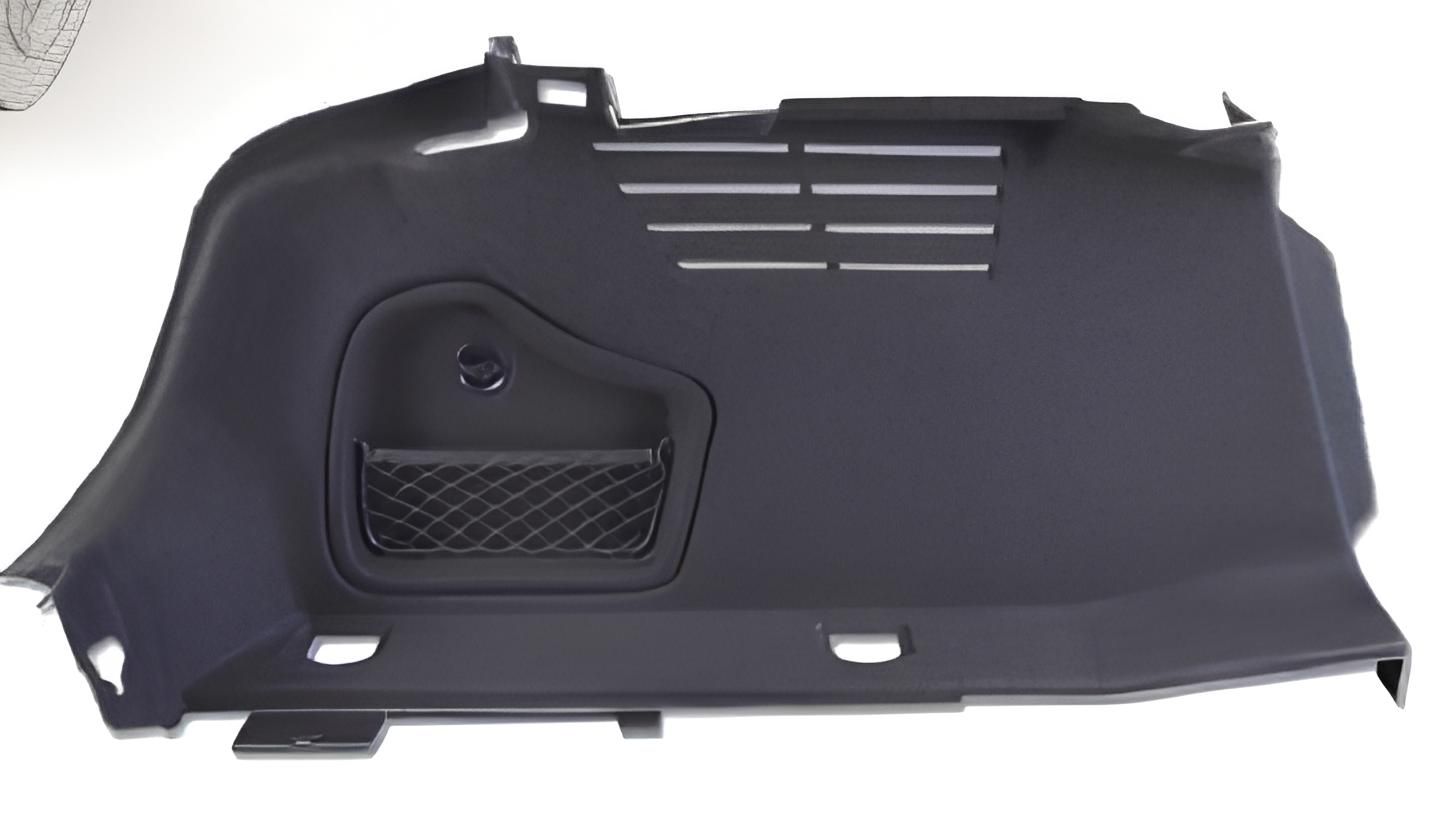
Physical Foaming for Automotive Compartments
Physical Foaming for Automotive Compartments
Physical foaming is a manufacturing process that creates lightweight automotive components by introducing microcellular structures into materials like plastics. This process is commonly used for producing parts such as dashboards, storage bins, door panels, and other interior or exterior components. It offers benefits in terms of weight reduction, cost efficiency, and improved performance.
Key benefits for automotive compartments
- Weight reduction by decreasing material density, leading to improved fuel efficiency and reduced emissions
- Cost efficiency through material savings without compromising part integrity
- Enhanced properties including sound insulation, thermal resistance, and high mechanical strength and stiffness
- Sustainability through the use of environmentally friendly blowing agents like CO2 or N2, and recyclable foamed components
Applications in automotive compartments
- Interior panels such as lightweight door panels and dashboards
- Storage solutions with durable yet lightweight bins and compartments
- Acoustic components for noise-dampening solutions in cabin interiors
- Thermal shields for HVAC systems or engine compartments
- Exterior trim parts that combine durability with functional and aesthetic benefits
Process overview
1. Gas dosing: Environmentally friendly gases such as CO2 or N2 are precisely introduced into the material.
2. Mixing: The gas is evenly distributed within the polymer matrix using advanced mixing systems.
3. Foaming: During molding or extrusion, the gas expands to create a uniform cellular structure.
4. Shaping and curing: The foamed material is shaped into the desired component while retaining its cellular structure.
Promix Microcell Technology provides advanced solutions for physical foaming, delivering homogeneous cell structures, improved production efficiency, and compatibility with various polymers used in automotive applications.
Physical foaming offers a sustainable, cost-effective, and performance-driven solution for producing automotive compartments that meet the growing demands of modern vehicle manufacturing.