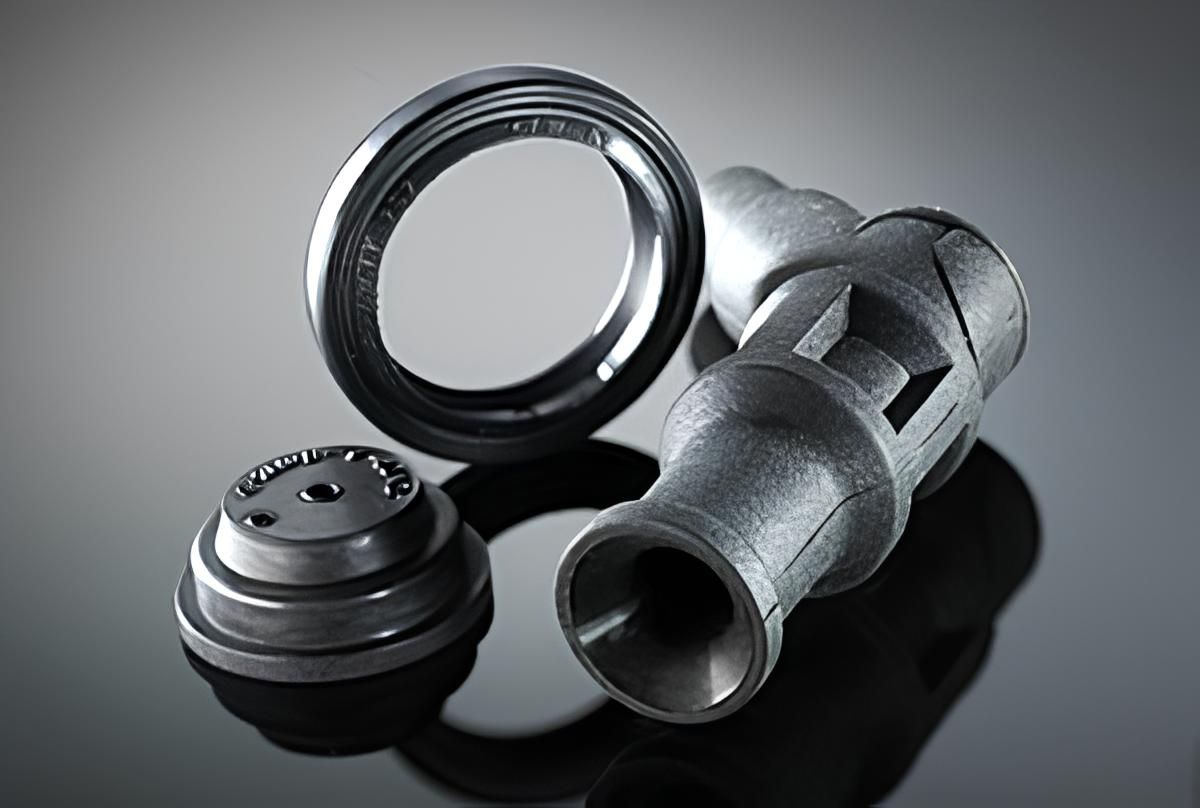
Rubber (Thermoset) Injection Molding Process
Rubber (Thermoset) Injection Molding Process with Dr. BOY Injection Molding Machines
Rubber (thermoset) injection molding is an advanced manufacturing process that enables the production of elastomer components with high precision, excellent repeatability, and efficient series production. Widely used in automotive, medical, electrical, household appliance, and industrial sealing applications, this process requires tight tolerances, uniform vulcanization, and stable mechanical properties. Injection molding machines from Dr. BOY are designed to meet these critical requirements through a compact, precise, and process-reliable machine architecture.
What Is Rubber (Thermoset) Injection Molding?
Rubber injection molding is based on injecting uncured elastomer materials—such as NR, NBR, EPDM, SBR, or silicone—into a closed mold cavity, where chemical crosslinking (vulcanization) is completed under heat and pressure. Unlike thermoplastics, thermoset rubber materials cannot be remelted after curing, making precise process control, material stability, and cycle repeatability essential.
The process typically consists of the following stages: material feeding and plasticizing, injection, vulcanization (curing), mold opening, and part removal.
Rubber Plasticizing Stage in Dr. BOY Machines
Plasticizing in rubber injection molding differs fundamentally from thermoplastic processing. The objective is not to fully melt the material, but to achieve a homogeneous, flowable state without excessive heat input. Dr. BOY machines use optimized screw geometries and highly precise drive systems that allow rubber compounds to be processed without overheating or premature vulcanization.
Servo-controlled hydraulic systems enable extremely accurate adjustment of screw speed, back pressure, and dosing. This preserves the internal structure of the rubber compound and ensures stable flow behavior during mold filling.
Injection and Mold Filling
The mold filling phase is critical in rubber injection molding, as uniform pressure distribution and void-free filling are essential for part quality. Dr. BOY injection molding machines provide exceptionally stable injection movements, even at very low speeds, ensuring controlled and consistent filling of the mold cavity.
This level of control helps prevent common rubber molding defects such as air traps, surface imperfections, incomplete filling, and internal stresses. It is particularly advantageous for thin-section parts, multi-cavity molds, and components with complex geometries.
Vulcanization (Curing) and Process Stability
The vulcanization stage is where the rubber part acquires its final mechanical properties. The stable clamping system and vibration-free operation of Dr. BOY machines ensure uniform contact between mold halves and consistent pressure conditions throughout the curing phase.
As a result, mold temperature distribution remains uniform, and curing time is applied consistently from cycle to cycle. This leads to reliable hardness, elasticity, and sealing performance of the finished parts.
Cycle Time and Productivity
In rubber injection molding, cycle time is largely determined by the curing duration. Dr. BOY machines perform all mechanical movements with high stability and precision, allowing the overall cycle to be optimized without compromising part quality.
This contributes directly to higher productivity and lower cost per part, especially in high-volume production environments.
Compact Design and Ergonomics
The cantilever (tie-bar-less) clamping design of Dr. BOY injection molding machines provides excellent accessibility to the mold area, which is particularly beneficial for rubber molds. This ergonomic layout shortens mold changeover times and simplifies operator intervention.
Thanks to their compact footprint, Dr. BOY machines can be easily integrated into rubber production cells, automation systems, and auxiliary equipment layouts.
Process Repeatability and Quality Assurance
In rubber (thermoset) injection molding, product quality is directly linked to cycle-to-cycle repeatability. Advanced control systems in Dr. BOY machines allow precise monitoring and recording of injection parameters, screw positions, pressure values, and cycle times.
These data provide a strong foundation for quality assurance systems, process optimization, and full traceability.
Typical Rubber (Thermoset) Applications
Rubber components produced on Dr. BOY injection molding machines include automotive sealing elements, O-rings, gaskets, vibration dampers, medical elastomer components, electrical insulation parts, and a wide range of industrial technical products.
Why Choose Dr. BOY for Rubber (Thermoset) Injection Molding?
Dr. BOY delivers the precision, stability, and process reliability required for rubber injection molding through compact, energy-efficient, and durable machines. Minimization of premature vulcanization risk, stable filling behavior, reliable curing conditions, and low scrap rates make Dr. BOY injection molding machines a strong solution for thermoset rubber applications.
For manufacturers with high quality expectations, a focus on series production, and a strong emphasis on process security, Dr. BOY provides a sustainable and competitive platform for rubber (thermoset) injection molding.