Product Descriptions
Case Study Approach for Electrical and Electronic Components
Injection molding applications for the electrical and electronics industry require the combination of high dimensional accuracy, flame-retardant materials, thin wall sections, complex geometries, and often additional processes such as insert molding. Although these parts typically have low individual weights, they are produced with high shot-to-part ratios, short cycle times, and very narrow process windows.
Dr. BOY injection molding machines provide high process reliability in electrical and electronic part production thanks to their compact design, precise injection control, and vibration-free mechanical systems. The following case studies are based on real production applications and include detailed technical and numerical data.
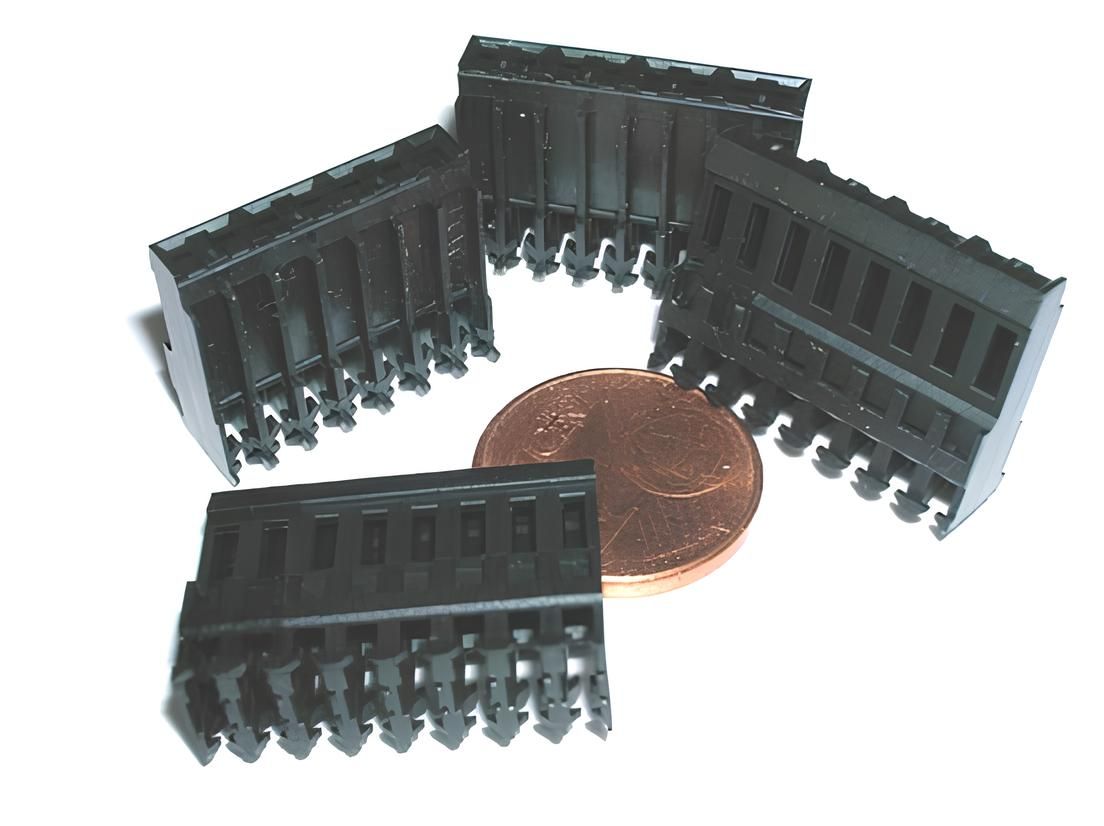
Case Study 1 - Connector Housing Made from Flame-Retardant PBT
Application Description
Production of a connector housing manufactured from flame-retardant PBT V0 material. Due to the flame-retardant additives, short residence time in the barrel is critical to maintain material stability.
Technical Data
Part type: Connector housing
Material: PBT V0
Part weight: 0.87 g
Shot weight: 3.26 g
Machine: BOY 12 A
Screw diameter: 14 mm
Cycle time: 7.6 s
Number of cavities: 2
Runner system: Pin gate with runner distributor
Process Challenge
Maintaining thermal stability of the flame-retardant material and ensuring consistent part quality at very short cycle times.
Dr. BOY Advantage
Small screw diameter and precise plasticizing control prevented material degradation and ensured dimensional stability during serial production.
Case Study 2 - Angled Connector Produced with Low-Viscosity Hotmelt
Application Description
Production of an angled connector and sealing ring using a PA-based elastomer (hotmelt) material that requires very low injection pressure.
Technical Data
Part type: Angled connector (elbow plug)
Material: PA elastomer (Macromelt)
Part weight: 7.2 g
Shot weight: 18.9 g
Machine: BOY 22 MVV
Screw diameter: 24 mm
Cycle time: 18 s (excluding insert placement)
Number of cavities: 2
Runner system: Tunnel gate
Process Challenge
Controlled injection of extremely low-viscosity material and prevention of flash formation.
Dr. BOY Advantage
Stable low-pressure injection behavior resulted in high surface quality and fully functional parts.
Case Study 3 - Thin-Wall Loudspeaker Housing Made from LSR
Application Description
Production of a loudspeaker housing made from liquid silicone rubber (LSR) with a wall thickness of 0.4 mm and a flow path length of approximately 240 mm.
Technical Data
Part type: Loudspeaker housing
Material: LSR
Part weight: 14.7 g
Shot weight: 17.3 g
Machine: BOY 22 D HV
Screw diameter: 22 mm
Cycle time: 28 s
Number of cavities: 1
Runner system: Side film gate
Process Challenge
Achieving homogeneous mold filling despite extremely thin walls and long flow paths.
Dr. BOY Advantage
Precise injection control and stable clamping force enabled defect-free production of the thin-wall LSR component.
Case Study 4 - High-Precision Switch Housing
Application Description
Production of a switch housing with very tight tolerances where deformation is not permitted.
Technical Data
Part type: Switch housing
Material: PBT
Part weight: 3.61 g
Shot weight: 7.8 g
Machine: BOY 22 D
Screw diameter: 22 mm
Cycle time: 15.5 s
Number of cavities: 2
Runner system: Pin gate with connection
Process Challenge
Extremely high dimensional accuracy requirements and zero-tolerance for deformation.
Dr. BOY Advantage
Vibration-free machine mechanics ensured consistent geometry throughout serial production.
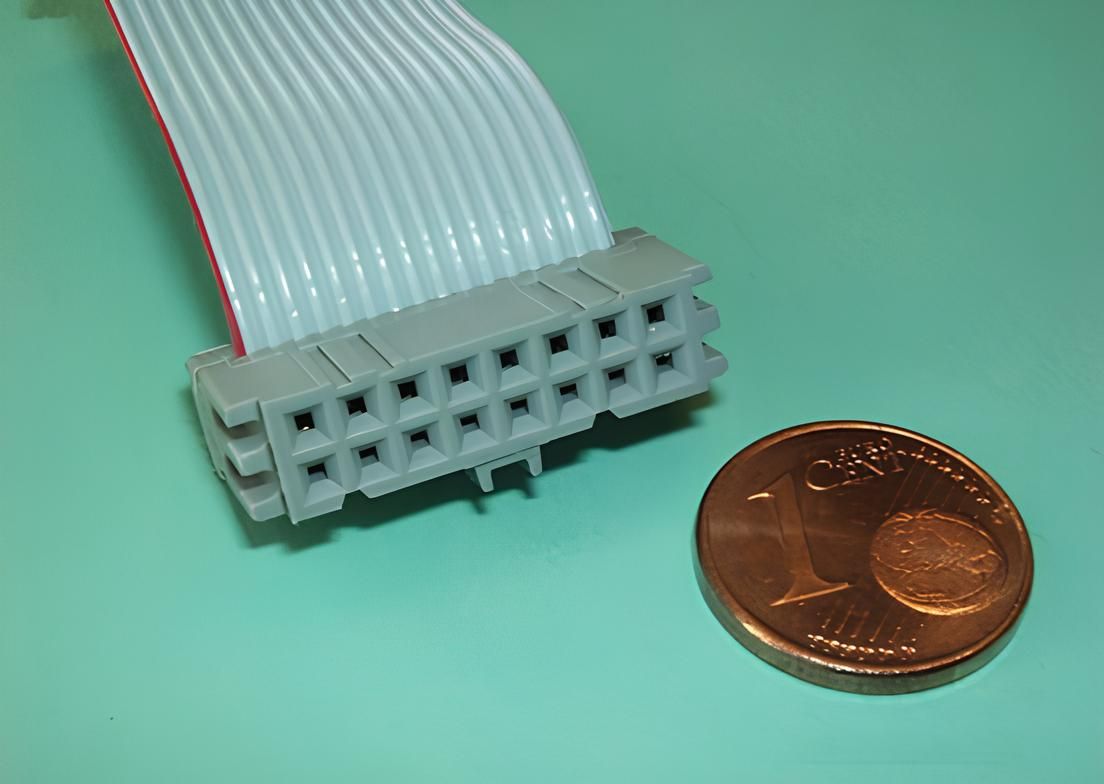
Case Study 5 - Cable Connector Produced by Insert Molding
Application Description
Insert molding application in which a cable strip is placed inside the mold and overmolded with PC material.
Technical Data
Part type: Cable connector
Material: PC
Part weight: 1.5 g
Shot weight: 9.7 g
Machine: BOY 22 M VV
Screw diameter: 18 mm
Cycle time: 22 s
Number of cavities: 4
Runner system: Runner distributor with connection
Process Challenge
Precise insert placement and maintaining balanced filling across multiple cavities.
Case Study 6 - Position Sensor Made from PA 6 with Magnetic Powder
Application Description
Production of a position sensor with critical magnetic field properties, magnetized directly inside the mold.
Technical Data
Part type: Position sensor
Material: PA 6 with magnetic powder
Part weight: 0.28 g
Shot weight: 11.5 g
Machine: BOY 22 A
Screw diameter: 18 mm
Cycle time: 18 s
Number of cavities: 8
Runner system: Direct runner distributor
Overall Evaluation - Results from Electrical Parts Case Studies
These electrical and electronic part case studies clearly demonstrate the capabilities of Dr. BOY injection molding machines:
Compatibility with flame-retardant and high-performance engineering plastics
Stable processing of LSR, hotmelt, magnetic-filled, and glass-fiber-reinforced materials
Wide application range from micro components to larger functional parts
High dimensional accuracy at short cycle times
Excellent suitability for insert molding and functional integration
Conclusion - Why Choose Dr. BOY for Electrical and Electronic Injection Applications?
Dr. BOY injection molding machines are not just compact machines for electrical and electronic part production; they represent a comprehensive production platform offering high process reliability, dimensional stability, and functional integration. These real industrial case studies clearly demonstrate why Dr. BOY is a trusted solution for connector, sensor, and electronic housing applications.