Product Descriptions
Phosphodegreasing and Metal Surface Pretreatment Products
ACCA phosphodegreasing and metal surface pretreatment products are developed to degrease, clean, lightly pickle and phosphate iron and steel surfaces before painting, coating and other finishing operations. Products combining cleaning and phosphating in a single process help prepare the metal surface for subsequent coating and support improved corrosion resistance.
Oil, grease, machining fluids, oxides, rust and other manufacturing residues on metal surfaces can prevent paints and coatings from adhering correctly. Inadequately prepared surfaces may lead to blistering, peeling, surface defects and premature corrosion.
Phosphodegreasing combines degreasing and phosphating within a single chemical process. Under suitable operating conditions, it helps remove oily contamination while forming a thin protective phosphate layer on the metal surface.
The phosphate layer supports paint and coating adhesion. It also forms an intermediate layer between the metal and the environment, contributing to the corrosion performance of the complete painted system.
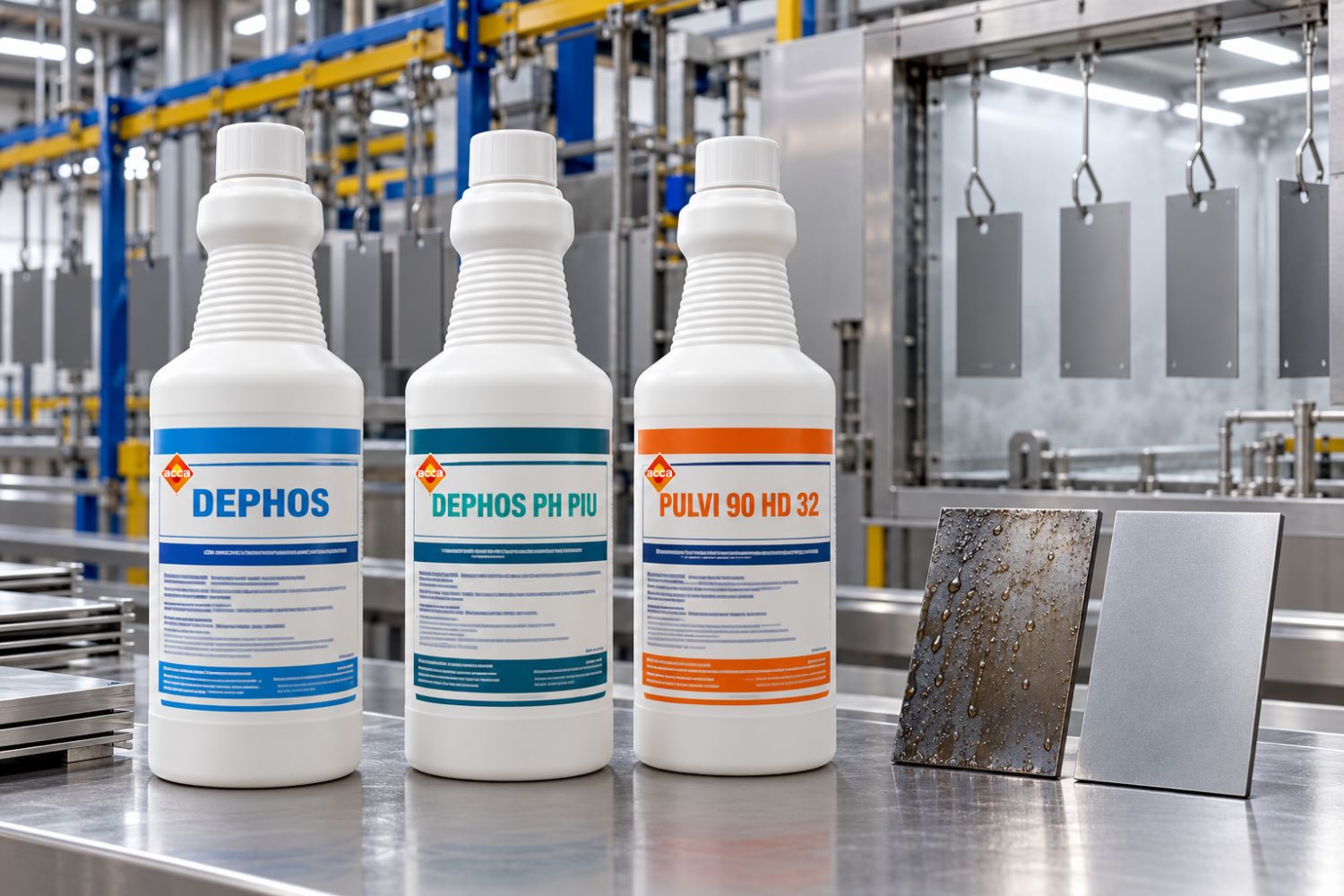
The ACCA range includes a multipurpose liquid phosphodegreaser for heated automatic plants, an alkaline additive for adjusting the pH of phosphodegreasing baths and a liquid product combining degreasing, pickling and phosphating action.
Phosphodegreasing performance does not depend solely on the selected chemical. Bath concentration, temperature, pH, contact time, spray pressure, surface contamination and rinsing quality must be controlled together. Regular bath analysis and process monitoring are important for maintaining consistent surface quality.
Products
DEPHOS
A multipurpose liquid phosphodegreaser developed for ferrous alloys. Its high cleaning performance helps remove oils and manufacturing residues from metal surfaces.
It generates a mixed layer of iron and zinc phosphates. This layer helps protect the metal surface and prepares it for subsequent painting or coating.
DEPHOS is developed for use in heated automatic surface-treatment plants. It can be considered for spray lines and controlled automatic systems.
Main characteristics:
- Suitable for iron and steel alloys
- Combines degreasing and phosphating
- High cleaning performance
- Produces a mixed iron and zinc phosphate layer
- Prepares surfaces before painting and coating
- Suitable for heated automatic systems
- Contributes to corrosion protection of metal surfaces
DEPHOS PH PIU
An alkaline additive developed to regulate the pH of phosphodegreasing baths. If the bath pH falls below the required level, phosphate-layer formation and overall process performance may be adversely affected.
DEPHOS PH PIU helps restore the bath pH to the correct operating range. The ACCA catalogue specifies a target pH range of 3.5 to 5.
This product is not a stand-alone surface cleaner or phosphating chemical. It is a process additive used in a controlled manner to maintain the chemical balance of the phosphodegreasing bath.
Main characteristics:
- Alkaline pH regulator for phosphodegreasing baths
- Helps correct low bath pH
- Supports stable phosphating performance
- Helps maintain the target pH range
- Simplifies process control in automatic treatment lines
- Supports bath-life and process-continuity management
PULVI 90 HD 32
A liquid phosphating and pickling product that combines degreasing, pickling and phosphating action on ferrous surfaces. It helps remove oily contamination, dissolve light oxide and rust deposits, and create a phosphate layer on the surface.
It is developed for use in automatic surface-treatment plants. The ACCA catalogue recommends operation at approximately 55 to 60 degrees Celsius.
Combining degreasing, surface activation and phosphating effects in the same bath may simplify the process in suitable applications. Actual process conditions should be determined according to contamination level, component geometry and required coating performance.
Main characteristics:
- Suitable for iron and steel surfaces
- Combines degreasing, pickling and phosphating action
- Liquid formulation
- Suitable for automatic surface-treatment systems
- Heated application
- Helps remove light oxide and rust residues
- Prepares surfaces for painting and coating
What Is Phosphodegreasing?
Phosphodegreasing is a chemical pretreatment process that removes oily contamination while forming a thin phosphate conversion layer on the metal surface. It can combine degreasing and phosphating operations that might otherwise be performed as separate stages.
The process is commonly used to prepare iron and steel components before liquid painting, powder coating or other protective finishes. The phosphate layer supports paint adhesion and contributes to the corrosion performance of the coating system.
Phosphodegreasing should not always be expected to remove heavy rust, thick mill scale or severe oxide layers completely. Heavily contaminated parts may require mechanical cleaning, separate degreasing or a stronger pickling stage.
Recommended General Process Sequence
1. Surface Inspection
Components are evaluated for oil, grease, rust, mill scale, welding residue and other contaminants. Additional preliminary cleaning may be required for heavily contaminated surfaces.
2. Phosphodegreasing or Phosphating Pickling
DEPHOS or PULVI 90 HD 32 is applied according to process requirements. Concentration, temperature, pH, contact time and spray pressure are adjusted in accordance with the technical documentation.
3. Bath Control
The concentration and pH of the phosphodegreasing bath are checked regularly. If the pH falls below the target range, DEPHOS PH PIU may be added according to analytical results.
4. Rinsing
Chemical residues and detached contamination are removed using water of suitable quality. Rinse-water cleanliness can directly affect surface quality and paint performance.
5. Required Final Treatments
Depending on the process design, passivation, a final rinse with demineralised water or another surface-conditioning stage may be applied.
6. Drying and Coating
Components are dried under clean conditions and transferred to the painting or coating line without recontamination. Water marks, dust and oily contact should be prevented.
Main Application Areas
- Metal pretreatment before powder coating
- Iron and steel parts before liquid painting
- Automotive and component manufacturing
- White goods and household appliance components
- Metal furniture and shelving systems
- Steel construction components
- Electrical panels and metal cabinets
- Agricultural machinery and equipment
- Machinery and spare-parts manufacturing
- Pipes, profiles and sheet-metal components
- Heating, ventilation and air-conditioning equipment
- Industrial metal products
- Spray surface-treatment lines
- Heated automatic phosphating plants
- Pretreatment of mass-produced metal components
Key Benefits
- Helps combine degreasing and phosphating in one process
- Supports removal of oils and production residues
- Contributes to paint and coating adhesion
- Forms a protective phosphate layer on the metal surface
- Helps improve the corrosion resistance of painted systems
- Suitable for automatic and spray treatment lines
- Can help reduce the number of process stages and treatment time
- Enables controlled adjustment of bath pH
- Supports repeatable surface quality in mass production
- Offers a product combining degreasing, light pickling and phosphating
Product Selection
DEPHOS can be considered in heated automatic systems requiring high cleaning performance and a mixed iron and zinc phosphate layer.
DEPHOS PH PIU can be used when the pH of the phosphodegreasing bath falls below the correct operating range and analysis confirms that adjustment is necessary. The dosage must be determined only through measurement and technical instructions.
PULVI 90 HD 32 can be selected for automatic systems requiring degreasing, light pickling and phosphating in the same treatment stage. The approximate operating temperature of 55 to 60 degrees Celsius recommended in the ACCA catalogue should be considered.
The following criteria should be evaluated:
- Type and alloy of the metal
- Amount of oil, grease, rust and oxide
- Component geometry and surface area
- Spray or immersion application
- Line temperature and contact time
- Bath pH and concentration
- Required phosphate layer
- Type of subsequent paint or coating
- Corrosion-resistance target
- Production rate and component volume
- Customer specifications and applicable standards
Importance of Process Control
A phosphodegreasing bath requires regular measurement and maintenance. Monitoring pH alone may not be sufficient. Bath concentration, total and free acidity, temperature, contact time, oil load, sludge formation and rinse-water quality should also be monitored according to process requirements.
Chemical additions should not be based on estimation. Bath-analysis results and ACCA technical recommendations should be followed. Uncontrolled chemical additions may cause uneven phosphate formation, powdery deposits or reduced paint adhesion.
Application and Safety Statement
Phosphodegreasing and phosphating-pickling products may contain acidic or alkaline components. The latest technical data sheet and safety data sheet must be reviewed before use.
Adequate ventilation should be provided, and chemical-resistant gloves, safety glasses, face protection and protective clothing should be worn. Products must not be mixed with other chemicals without technical approval.
Bath preparation, chemical addition and pH adjustment should be performed by trained personnel. Trials under actual production conditions are recommended, followed by verification of paint adhesion and corrosion performance using the relevant test methods.