Product Descriptions
Closed-Loop, Heating and Glycol Systems
In closed-loop water systems, the continuous circulation of the same water can gradually concentrate problems such as corrosion, scale formation, sludge, metal oxides and microbiological contamination. These deposits may restrict pipework, increase the load on pumps and valves, reduce heat transfer through radiators and heat exchangers, and increase overall energy consumption.
ACCA products for closed-loop, heating and glycol systems are designed to support the cleaning, protection and efficient operation of industrial cooling circuits, central heating installations, chiller systems, boiler circuits, radiators and HVAC applications.
The range includes system cleaners, corrosion inhibitors, scale-control products, sludge and iron-oxide dispersants, microbiological-control treatments and inhibited antifreeze solutions. Correct product selection helps protect metal surfaces, control deposits and maintain stable circulation throughout the system.
Cleaning Closed-Loop Systems
New installations may contain oil, flux, assembly residues and other contaminants originating from manufacturing and installation. Systems that have been operating for extended periods may accumulate sludge, iron oxides, corrosion products, and organic or inorganic deposits.
ACCA closed-loop cleaners help remove these contaminants and restore effective circulation. Non-acidic options compatible with system metals allow controlled cleaning of pipework, pumps, valves, boilers, radiators and heat exchangers.
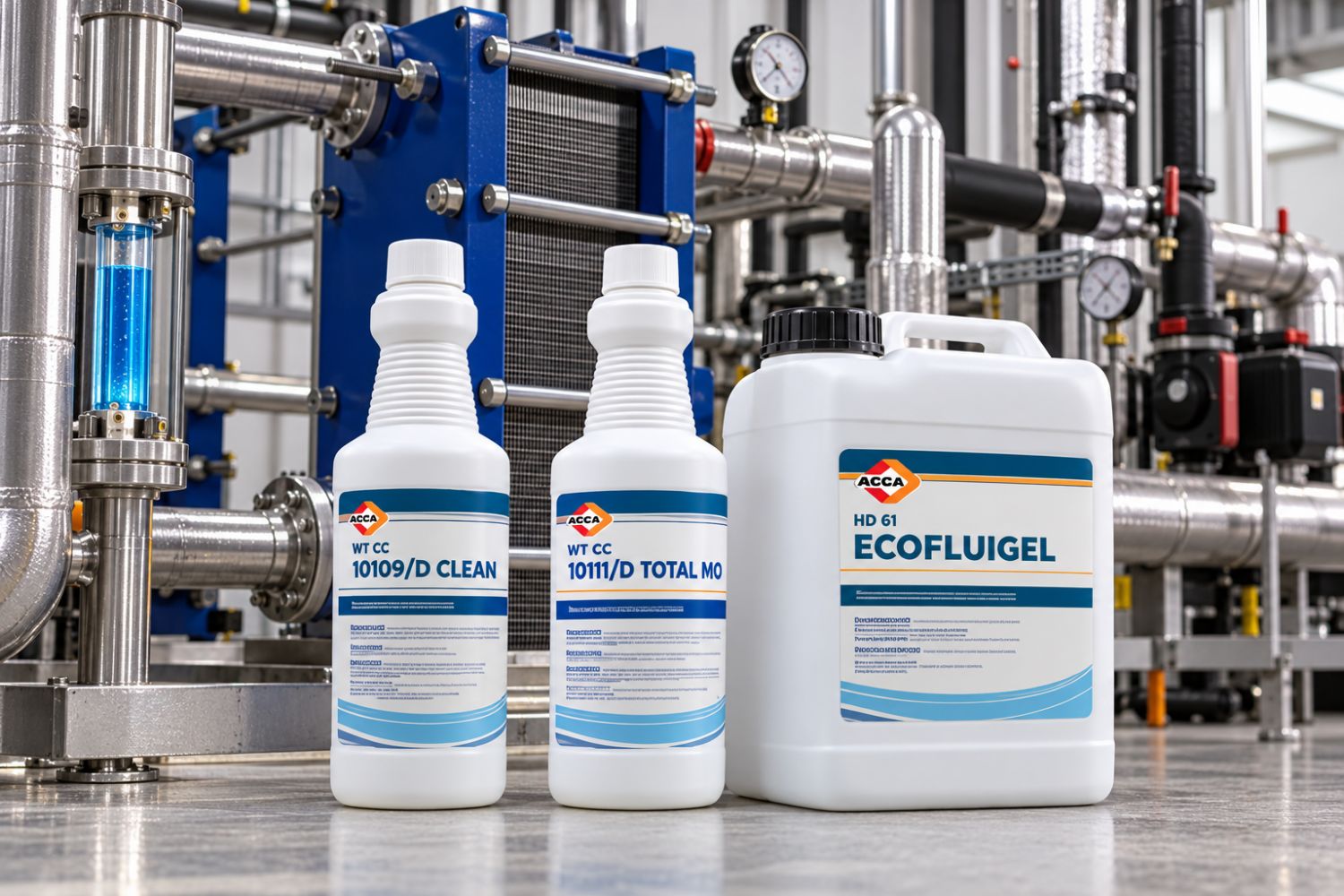
Products such as WT CC 10109/D CLEAN can be used as dispersants during system operation to help suspend sludge and iron oxides. TERMO HD 1003 is designed for cleaning new heating installations, while TERMO HD 1004 targets sludge and corrosion residues in systems that have been operating for some time. TERMO HD 1008 may be considered for heavily contaminated systems with deposits or partial blockages.
Corrosion and Scale Control
The presence of different metals within the same circuit can increase the risk of galvanic corrosion. Iron, steel, copper and aluminium surfaces require inhibitors selected according to the system materials and the chemical characteristics of the circulating water.
WT CC 10110/D DE RUST MO, WT CC 10111/D TOTAL MO and WT CC 10113/D TOTAL SI contain combinations of corrosion inhibitors, dispersants and scale-control agents. They help create protective conditions for metal surfaces, limit the precipitation of insoluble salts and support stable system operation.
WT CC 10115/D TOTAL TREAT is a concentrated treatment intended for closed loops requiring combined protection against scaling, corrosion and microbiological growth.
For heating installations, TERMO HD 1001 supports corrosion control, while TERMO HD 1002 helps address scale formation and boiler noise. Product selection should consider the metals within the installation, water hardness, operating temperature and existing contamination level.
Glycol and Antifreeze Solutions
In installations operating at low temperatures or exposed to freezing conditions, freeze protection alone is not sufficient. The glycol solution should also protect metal surfaces against corrosion, limit deposit formation and remain stable during long-term operation.
ACCA ECOFLUIGEL and FLUIGEL are inhibited antifreeze solutions developed for industrial refrigeration and air-conditioning applications. At the appropriate concentration, FLUIGEL can provide protection down to approximately -60 °C. ECOFLUIGEL is an option for suitable applications where there may be a risk of incidental food contact.
TERMO HD 1005 combines permanent antifreeze protection with dispersing, anti-scaling and anticorrosive properties in a biodegradable formulation intended for heating installations.
The glycol concentration should be determined according to the required freezing point, system volume, operating temperature and technical recommendations. An insufficient concentration may fail to provide adequate protection, while excessive glycol can increase fluid viscosity and energy consumption.
Main Application Areas
- Central heating and radiator systems
- Industrial closed-loop cooling circuits
- Chiller and HVAC installations
- Heat-pump systems
- Boiler and hot-water circuits
- Mould-cooling systems
- Plate and tubular heat exchangers
- Process-cooling installations
- Solar-energy and heat-recovery systems
- Technical circuits exposed to freezing conditions
- Suitable cooling applications in food and beverage plants
Main Benefits
- Helps control corrosion and metal-oxide formation
- Limits scale, sludge and deposit accumulation
- Supports the protection of pipes, pumps, valves, radiators and heat exchangers
- Helps maintain effective heat transfer and water circulation
- Can contribute to reducing boiler and system noise
- Provides glycol and antifreeze options for freeze protection
- Helps reduce unplanned downtime and maintenance requirements
- Offers different solutions for systems containing iron, steel, copper and aluminium
Product Selection Considerations
Product and dosage selection should consider system volume, operating temperature, water hardness, pH, construction metals, existing deposit levels, microbiological risk and the required freeze-protection temperature. Technical data sheets and safety data sheets should be reviewed before use. In heavily contaminated systems, cleaning should be completed before adding the protective treatment or inhibited glycol solution.