Why Does Airtect Act Like an Insurance Policy Against Hot Runner Leaks?
Why Does Airtect Act Like an Insurance Policy Against Hot Runner Leaks?
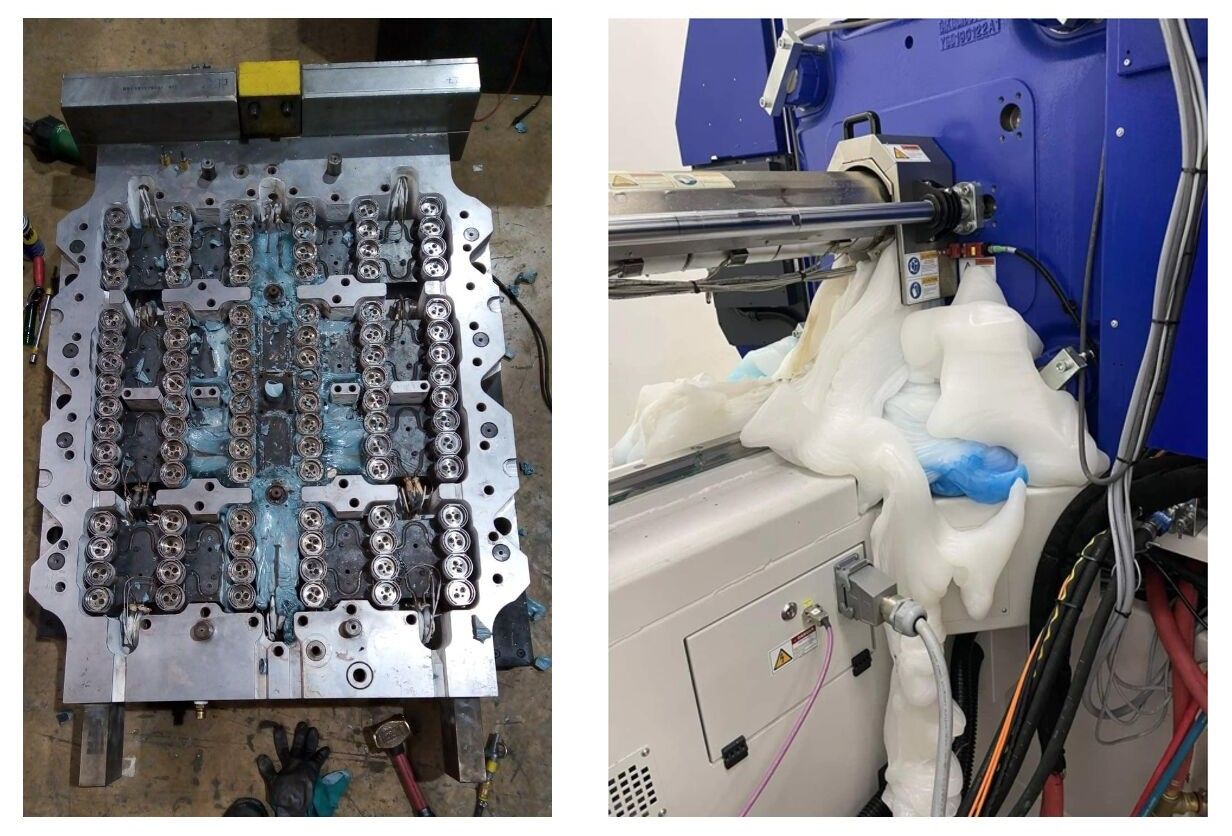
Plastic leaks in hot runner systems are among the most costly problems in injection molding. Even a small leak that goes unnoticed for just a few cycles can quickly escalate into nozzle damage, plate filling, heater failure, or even a cracked hot runner manifold. This not only leads to expensive repairs but also results in production downtime that can last for days.
This is exactly where Airtect makes the difference:
It stops the system the moment a leak begins and protects the mold before any serious damage occurs.
In other words, it acts like an insurance policy—helping you prevent the incident before it happens.
Here are the four main reasons why Airtect provides a “risk-free insurance effect”:
1) Micro-level detection
Airtect senses the tiniest changes in airflow within the sensor tubes, detecting a leak long before it becomes visible or destructive.
2) Precise, zone-based localization
With multi-zone manifolds, Airtect identifies the exact area where the leak occurs—nozzle tip, manifold block, or between plates. This ensures fast intervention and minimal downtime.
3) Automatic machine shutdown (interlock)
When an alarm is triggered, the injection process stops automatically. This protects the mold, the hot runner, and the injection machine from serious damage.
4) Extremely fast return on investment for high-value molds
In most cases, a single leak event is enough to recover the full investment cost of an Airtect system. For this reason, many major manufacturers consider Airtect an essential part of their mold protection strategy.
Conclusion
Airtect is a real-time protective shield against hot runner leaks in injection molding. It operates like an insurance policy—only far more effective, because it protects you at the moment a problem begins, not after the damage has already occurred.